Lesson 3: Staffs & Clefs
Music has not always be written the same way. As stated at Gabriella Scelta's
Music Symbol site,
by the 1700s, the use of a five line staff to write music was firmly established. According to
Exploring The Arts Foundation,
the use of a 4 line staff appeared in the 10th century and a system of fixed note lengths arose in the 14th century.
"Vertical bar lines that divide the staff into sections appeared in the 15th century. By the early 16th century,
notation had assumed much of its modern form, with the essential components of staff, clef, Time signature and durational
values, though bar lines only gradually became widespread during the 16th and 17th centuries as an aid in ensemble
performance. Regular measures (bars) became commonplace by the end of the 17th century." Music today is still evolving
and practices used in Western Music have been adopted by all musicians worldwide. Modern music evolved from
plainsong notation.
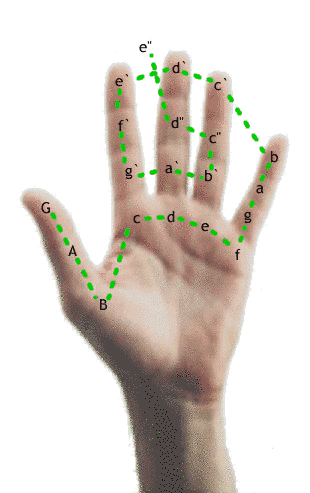
| Music is written on a five line staff. It's predecessor, a 4 line staff (Neumes), is mistakenly attributed to Guido of Arezzo, but he did not invent any staffs. He invented a notation system to assist Gregorian singers. A comparison of the two staff systems illustrates how musical notes can be written down. What made Guido of Arezzo famous is his Guidonian Hand (Manis Guidonis), that is illustrated below the modern 5 line staff. It helped Gregorian singers to sight read written music and introduced the first use of solfege. |
|