

Triads & Major/Minor Thirds
This site is for music students and their teachersIntervals
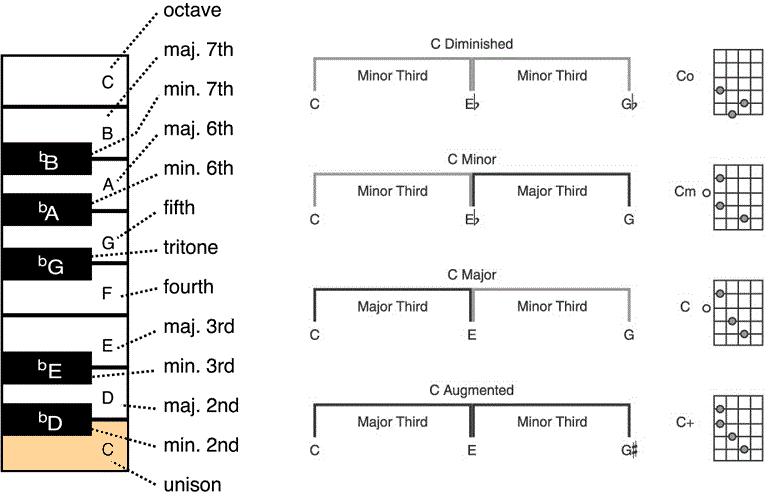
An interval is the distance between two notes -- and the most important of these are the minor 3rd interval and major 3rd interval. Two other important intervals are the perfect 4th and perfect 5th. As shown below, triads are the basis of all chords. C major is made up of of a major third and a minor third, and C minor is made up of a minor third and a major third. One can also form a diminished or augmented chord. There are 4 types of triads.
Main Types of Chords
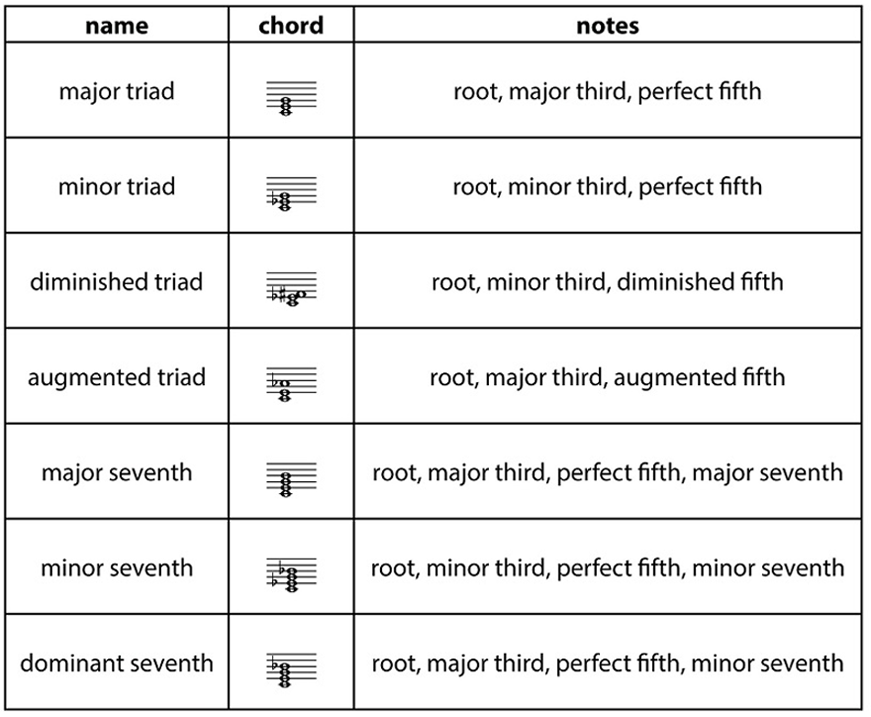
There are seven main types of chords. For guitarists, it is better to refer to actual chord diagrams.
G Major Triad and it's Inversions
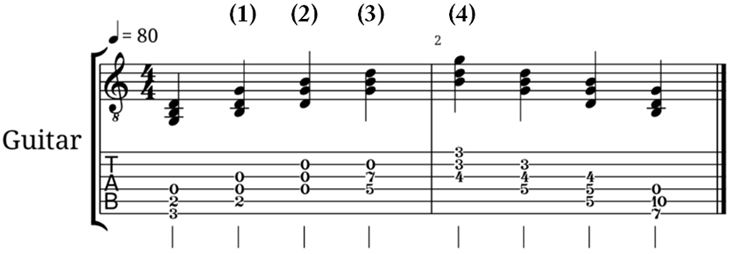
Every triad can have 2 inversions. In the diagram shown below, chords 1 and 2 are inversions of the first G triad chord. Chord 3 is an inversion of chord 2, and chord 4 is an inversion of chord 3.
C Major Triad and it's Inversions
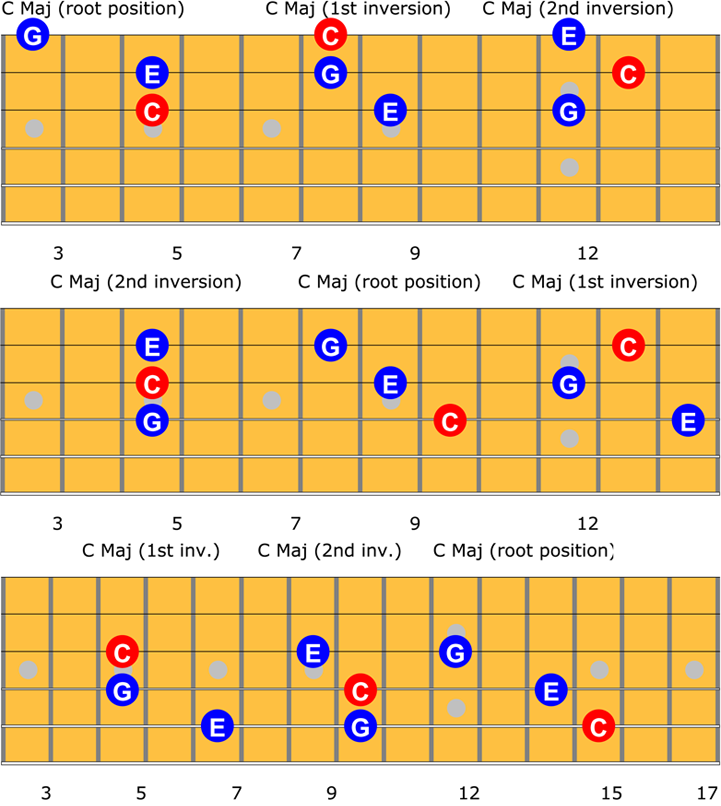
The following diagram shows the C major triad and it's inversions.
Choice of Chords
Harrison would often play a higher version of the same chord Lennon was playing. From the above triads, one could form a larger chord, keeping in mind that the bottom note is not necessarily the root. In the examples shown below, the root note is on the bottom, as opposed to something like C/E or C/G.
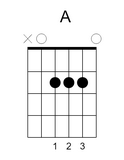
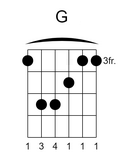
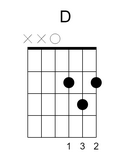
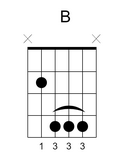
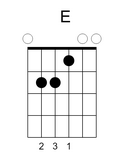
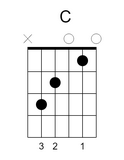
The Beatles didn't restrict themselves to just triads and non-7th chords derived from them. They also played 7ths, 9ths, and even 11ths. I Saw Her Standing There ends on an E9 and Twist and Shout ends on a D9. The Beatles would often reserve chords till after the first two verses.
Song Structure
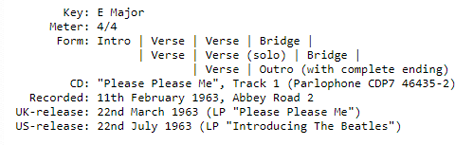
The usual structure of Beatles' songs is:

I Saw Her Standing There had two extra verses and another bridge. The Beatles used verses, choruses and bridges like building blocks. The song Twist and Shout consisted of the following: verse + verse + bridge & arpeggio buildup + bridge + bridge & arpeggio buildup. The buildup is well known and not part of the original recording made by the Isley Brothers. The version recorded by the Beatles soon became the defacto standard.
Discover some new chord progressions.
