

Scales & Chords
This site is for music students and their teachersIn Western music, each successive scale note is usually a semitone (half-step) or full tone (or step) away from its neighbour. When one is first learning to play a guitar, it is scales that one should start with.
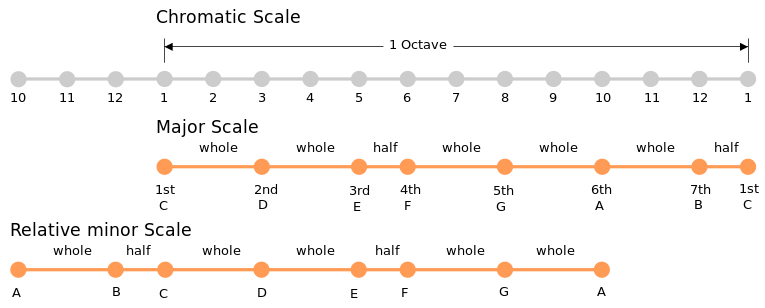
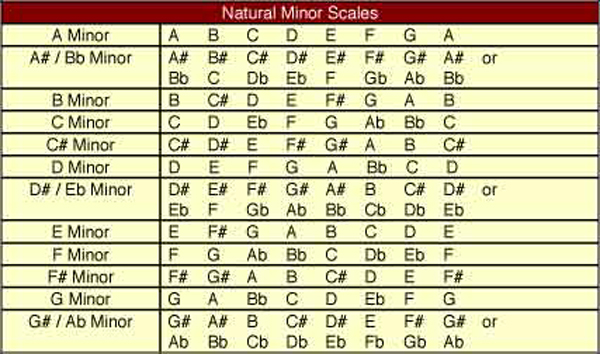
The major and minor scales used in Western music are based on 2 Greek modes: the Ionion mode (major) and Aeolian mode (minor). In total, there are 8 modes used today, and those important of these are the ones that form major and minor scales, as shown below. The relative (or natural) minor scale is only one of three types of minor scales. And the scales listed, are not the only types of scales used in music.
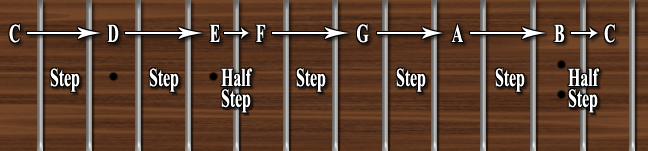
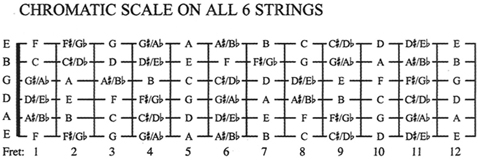
One can start anywhere on the fretboard, and by keeping half and whole steps in mind, determine the next played note. On a guitar, the note names start from E, A, D, G, B and E from each respective string.
| Scale | Ascending | Descending | ||||||||||||
|---|---|---|---|---|---|---|---|---|---|---|---|---|---|---|
| Natural Minor | W | H | W | W | H | W | W | W | W | H | W | W | H | W |
| Harmonic Minor | W | H | W | W | H | 1 1/2 | H | H | 1 1/2 | H | W | W | H | W |
| Melodic Minor | W | H | W | W | W | W | H | W | W | H | W | W | H | W |
| Dorian Minor | W | H | W | W | W | H | W | W | H | W | W | W | H | W |
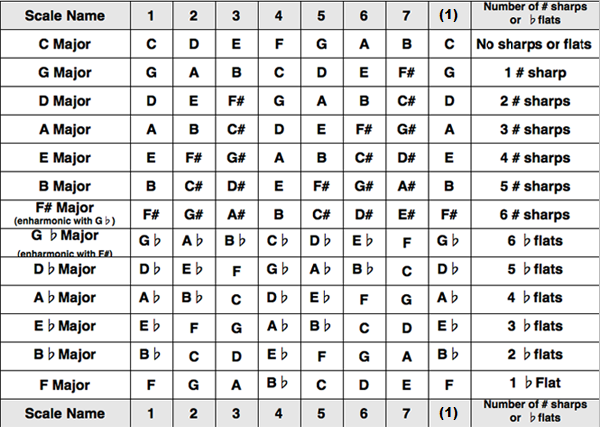
Without any reference to music notation, the major and minor scales are listed below. The major scales are listed vertically in the same order as the circle of 5ths and the minor scales listed are all natural minor scales. Most songs will have chord changes that involve these scales -- and chords based on these scales -- are build on top of the bottom ROOT note, that is part of a scale listed below (either major or minor).
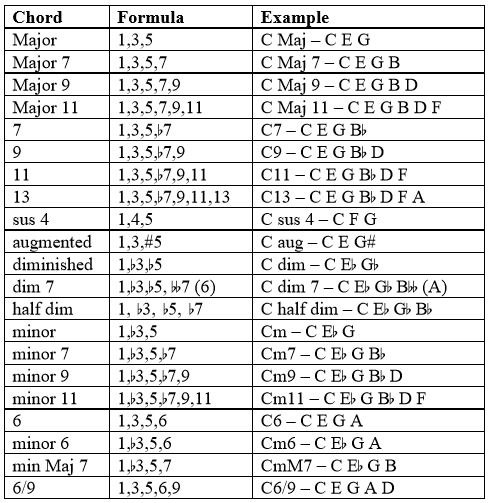
Chords themselves are based on intervals within a scale, with 1 denoting the root, ♭ indicating that the note is to be lowered a semitone and a ♯ indicating that the note has to be raised a semitone. For 1 3 5, the first, third and fifth notes would be played simultaneously, so for C major, this would C, E and G.
Commonly Used Chords
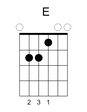
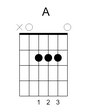
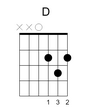
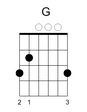
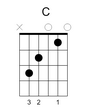
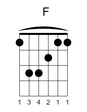
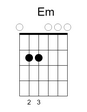
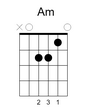
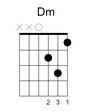
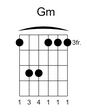
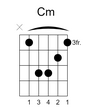
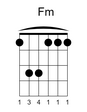
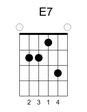
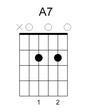
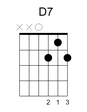
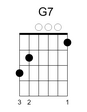
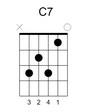
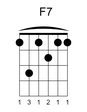
Most of these chords are open chords that have one or more open strings. These chords, of course, are not the only possible chords for each respective associated root note. There are also inversions of these chords.
October 1957 - February 1958: Emulating Their Idols
In October 1957, both Lucille and Lawdy, Miss Clawdy were released in the UK. Dreaming of stardom, both Lennon & McCartney started writing their own songs. 'Hello, Little Girl' is one of the first songs that was written (November 1957). It was followed by 'What Goes On' in January 1958. Hello, Little Girl was originally slower than what it eventually became prior to the Decca Audition. Written before George joined the group in February 1958, it was one of many songs that the Beatles gave away. At the time, they were still playing songs like 'Raunchy' and 'Glad All Over' (two songs that George would contribute). They played songs that they liked, even on the BBC.
George got into the group because of his guitar playing. The Beatles needed a guitar player to handle solos, etc. Raunchy was released in November 1957.
Discover some new chord progressions.
