Learning to read music, and learning about music theory in general,
can take up a lot of time, but in the long-run, the effort can pay off. Composers such as
Bach,
Mozart,
and Bill Holman
all began by learning music rudidments, and built upon that knowledge. Music is a subject that
is learnt successively from concepts that are less complex to those that are more complex. Set forth
here are some "building blocks" that will teach you how to read music and write simple compositions.
You may proceed through this site as you wish & connect ideas that are touched upon in each page
(use the menu at the top) to reinforce what you've just read. This site was designed for music educators and
their students. It takes you step by step through music concepts necessary to read and write music. Who knows, maybe one day you'll write something like
Bill Holman.
Site Purpose
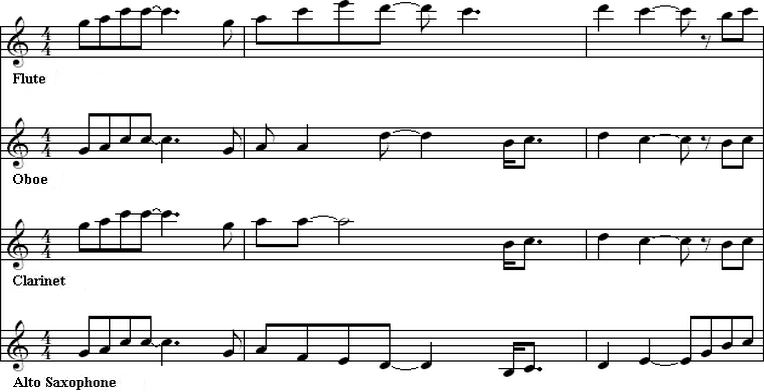
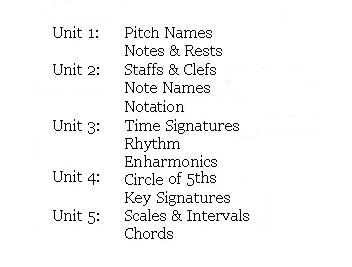
This site is for music educators and their students. It explores five areas of music theory and teaches concepts that students require when learning to read/write music. Included are short music examples to reinforce this material. Just as Mozart's Piano Sonata No. 16 in C major was written as a teaching composition, most of the examples associated with this site are for educational purposes. The teaching of music theory, and music in general, is what this site is about. The composition shown below was written by me in 2004. I began writing music when I was 16.