
Intervals
An interval is the distance between 2 notes. All the intervals are measured from the low note to the high note. On a piano, one can have a wide variety of intervals, including what is known as a tritone or devils interval (3 whole steps). In music, the further one gets away from the tonic, the more dissonant the resulting sound will be. The use of tritones is common today, in both pop and jazz. It was avoided for a long time, but has been embraced by modern music, and like the VIIth, needs to be resolved.In the diagram below, all the intervals are measured from the low C note.
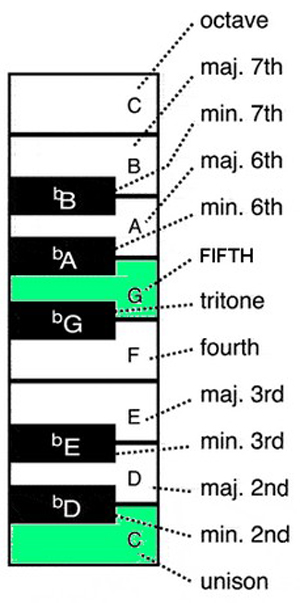
The size of an interval is effected by both the key signature and the accidentals being applied to each note; one must determine how far the upper note and lower note are from each other. As noted in many music theory websites, intervals that have been inverted result in a different sized interval -- for the inversion changes the distance between each of the notes. In ancient times, the tritone was avoided. Today, the interval comes up in conversation quite a few times -- and is often used, even though some do not know the name that refers to the concept.
© 2013 -- Reed Music Publications