
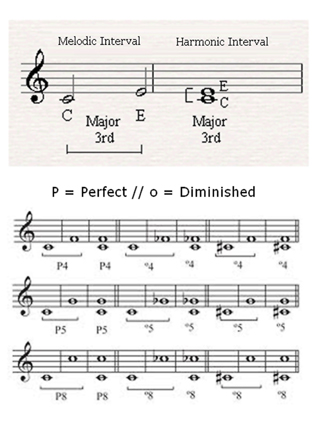
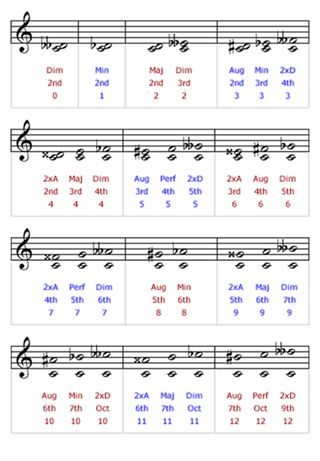
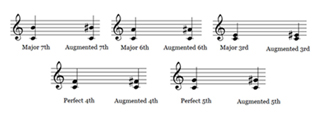
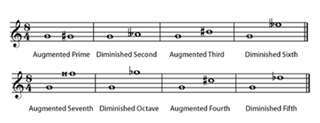
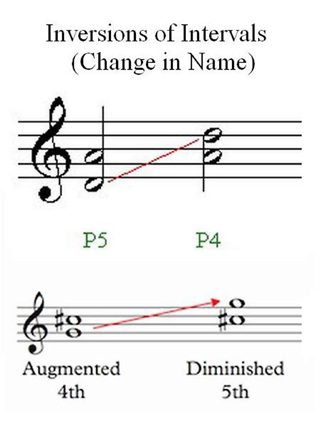
In Western music theory, the most common naming scheme for intervals describes two properties of the interval: the quality (perfect, major, minor, augmented, diminished) and number (unison, second, third, etc.). For instance, minor third or perfect fifth. These names describe not only the difference in semitones between the upper and lower notes, but also how the interval is spelled. The importance of spelling stems from the historical practice of differentiating the frequency ratios of enharmonic intervals such as G-G# and G-Ab.
© 2013 -- Reed Music Publications