Supply & Demand
As of January 12, 2012, cocoa prices "have increased by 15% in less than a week. The shortage is attributed to growing demand for cocoa in China and to growing demand worldwide for dark chocolate which is perceived to be healthier. Global capacity would need to increase by around 30% to keep up with demand." According to the article, recent price rises are also effected by bad weather conditions in West Africa. Production is being hampered by a trade wind from the Sahara (the Harmattan). Due to a shortage in production, "cocoa prices in the past year have been volatile. A good crop saw prices fall to a low of 1,450 Euros/tonne, but an Ivory Coast export ban saw prices rise to a high of 2,900 Euros/tonne." We are currently seeing the highest shortage of cocoa in 40 years. High demand for cocoa may drive up prices even further.
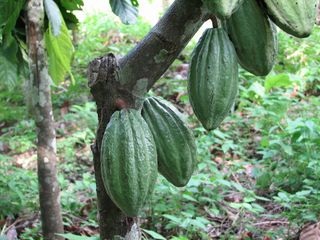
Europeans eat the most chocolate and this is where the tradition was introduced by a Spanish conquistador. In 1528, Hernando Cortez " loaded his galleons with cocoa beans and chocolate drink making equipment and it wasn't long before chocolate began working its magic on the Spanish." Cocoa was imported from the Americas, and the word chocolate itself is derived from the Mayan word xocolatl, which meant bitter water. Cocoa comes from the Aztec cacahuatl. For centuries chocolate was consumed as a drink until John Cadbury managed to create cocoa butter. Cocoa better is made from cocoa beans.
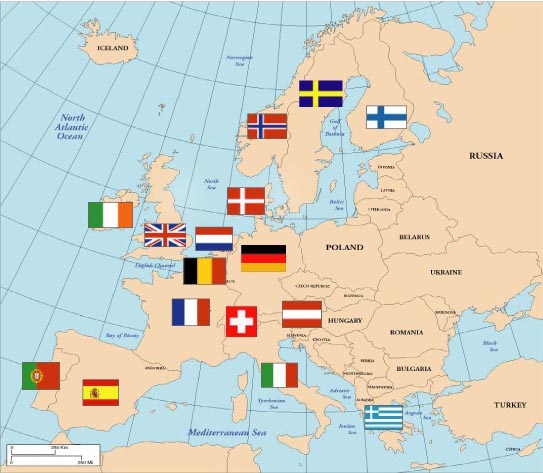
In Europe, 16 countries consume chocolate. The highest consumers are in Germany, Switzerland and the UK. Europe will continue to be one of the highest consumers of chocolate for the foreseeable future. The data on this site's map is from 2004. In this study, Switzerland leads the way at 22.36 lbs. per year. 52 000 calories, 3000 g fat, 2200 mg cholesterol, 8300 mg sodium, 6000 g carbs, 700 g protein.
The study's data is missing China. Recently five companies pushed to have the product introduced into the country. The almighty dollar is at the heart of this movement ... and supply is dwindling. Cocoa bean producers may not be able to keep up with over 2 billion consumers; and the product can only be grown in countries close to the equator. But alas, when there is a will, there is a way ... to grow it elsewhere.
| COUNTRY | KG/YEAR | LB/YEAR | 100g BARS/YEAR |
|---|---|---|---|
| Germany | 11.4 | 25.1 | 114 |
| Switzerland | 10.8 | 23.7 | 108 |
| United Kingdom | 10.3 | 22.7 | 103 |
| Norway | 9.8 | 21.6 | 98 |
| Denmark | 8.6 | 18.9 | 86 |
| Austria | 7.9 | 17.4 | 79 |
| Estonia | 7.9 | 17.3 | 79 |
| France | 7.4 | 16.3 | 74 |
| Finland | 7.0 | 15.4 | 70 |
| Belgium | 6.8 | 15.0 | 68 |
| Sweden | 6.6 | 14.5 | 66 |
| Lithuania | 6.1 | 13.4 | 61 |
| Australia | 6.0 | 13.1 | 60 |
| United States | 5.1 | 11.2 | 51 |
| Poland | 4.5 | 10.0 | 45 |
| Greece | 4.5 | 9.9 | 45 |
| Portugal | 4.5 | 9.8 | 45 |
| Hungary | 3.5 | 7.7 | 35 |
| Spain | 3.3 | 7.3 | 33 |
| Italy | 3.3 | 7.2 | 33 |
| Brazil | 2.5 | 5.5 | 25 |
| Bulgaria | 2.2 | 4.9 | 22 |
| Japan | 2.2 | 4.7 | 22 |
How many pounds of chocolate do you consume a year? Many people eat between 10 - 25 lbs per year.
Source: The Better and the Sweet